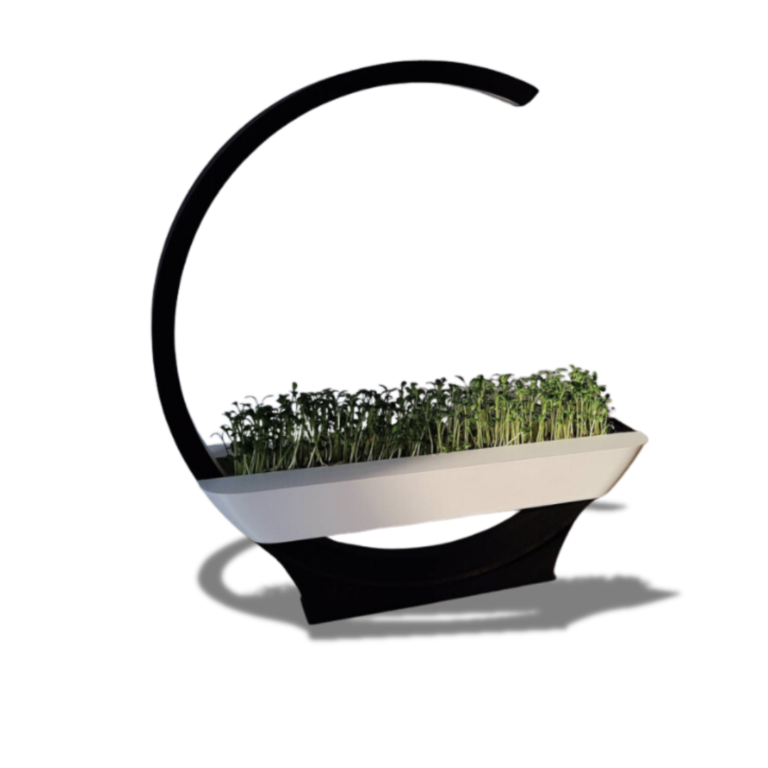
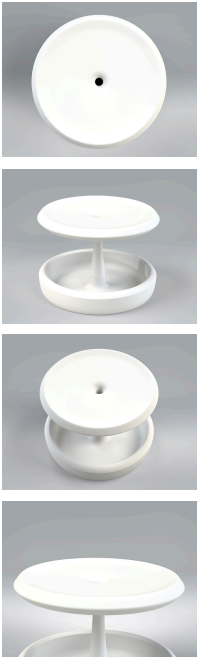
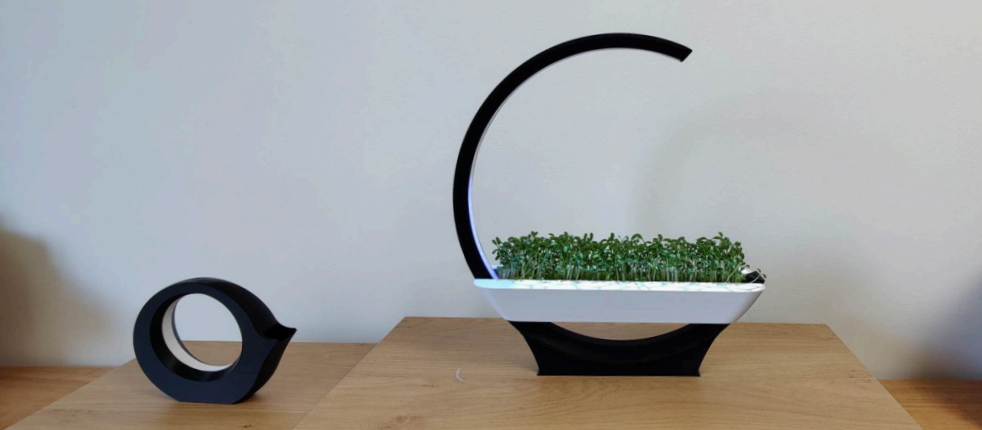
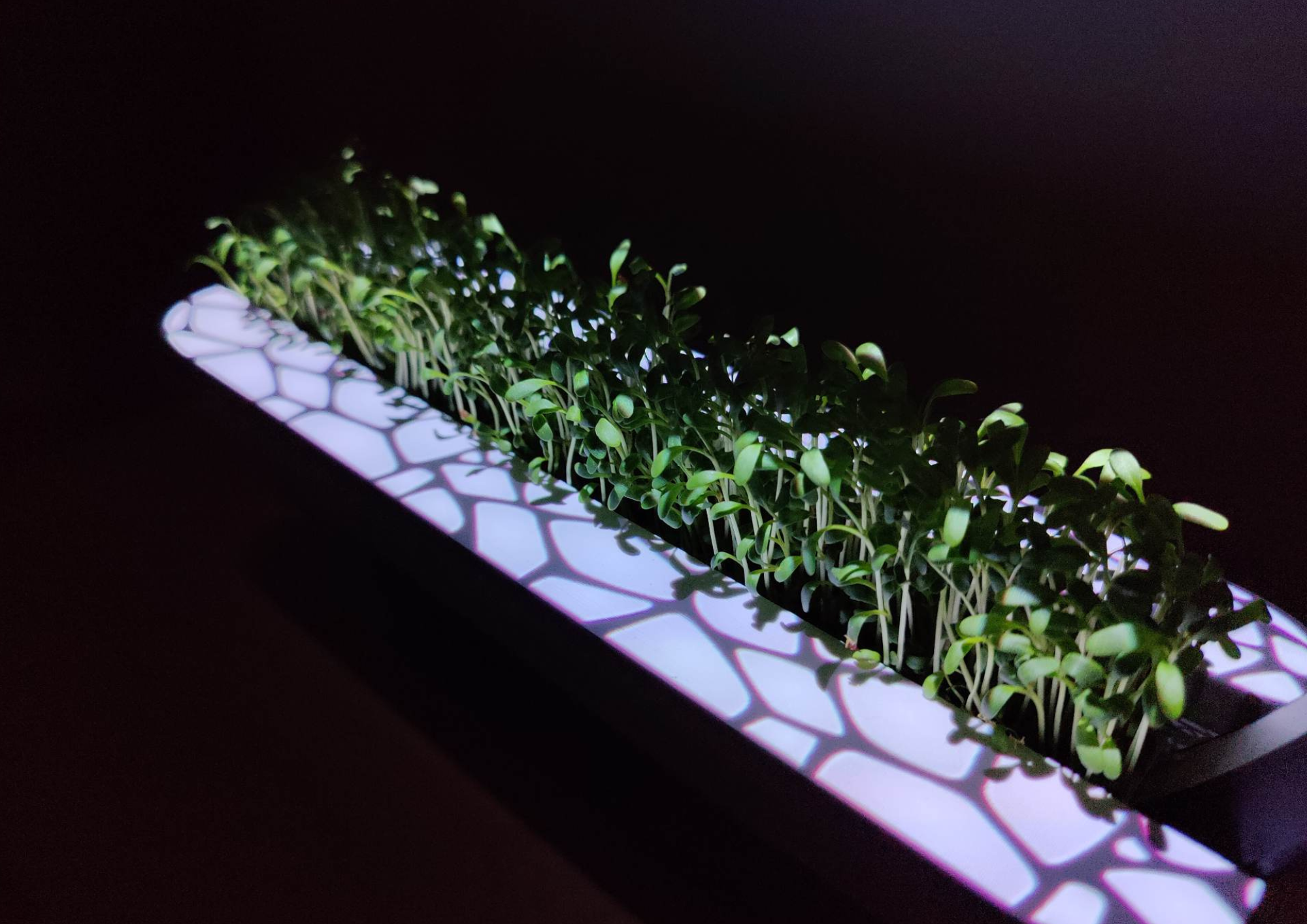
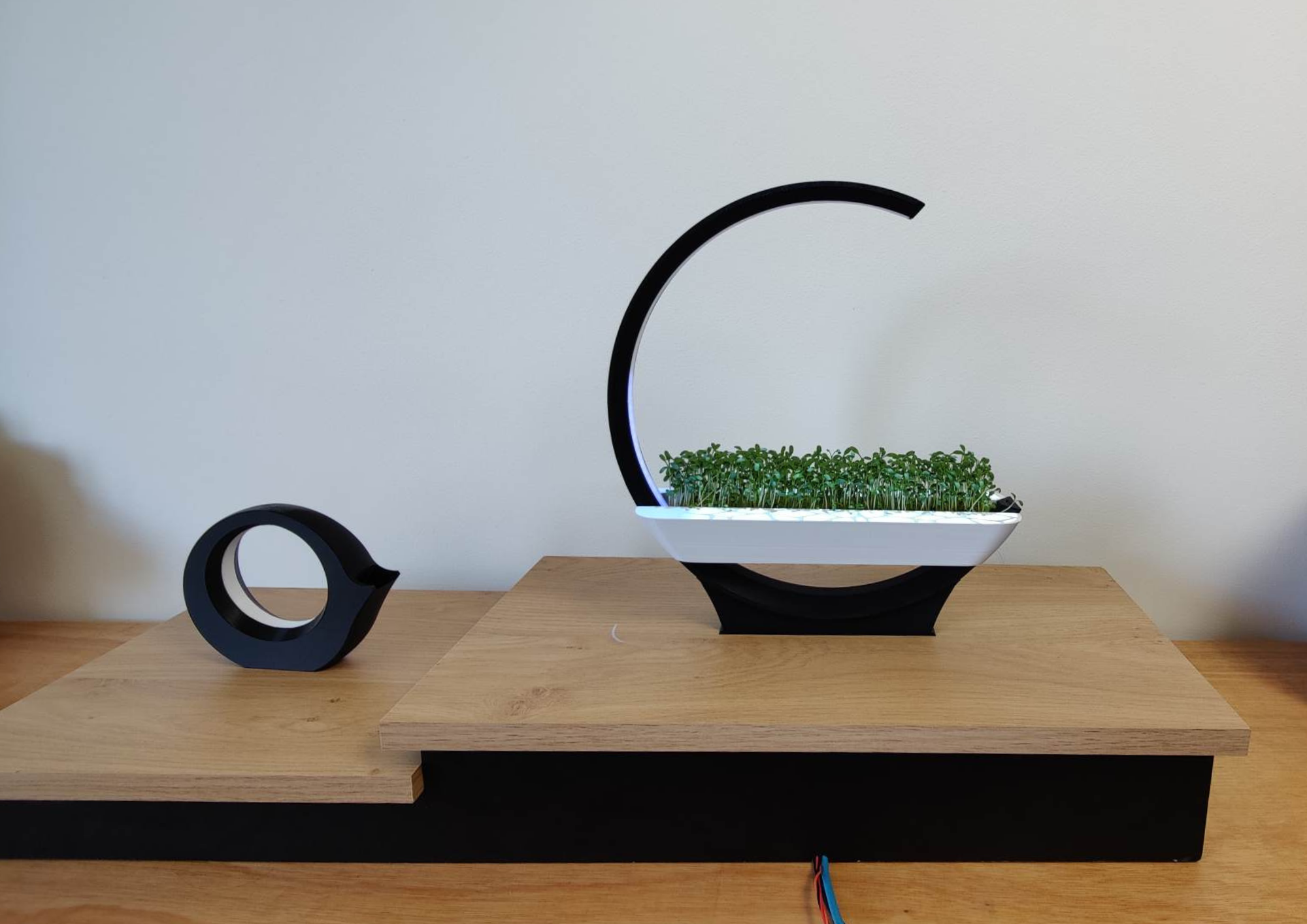
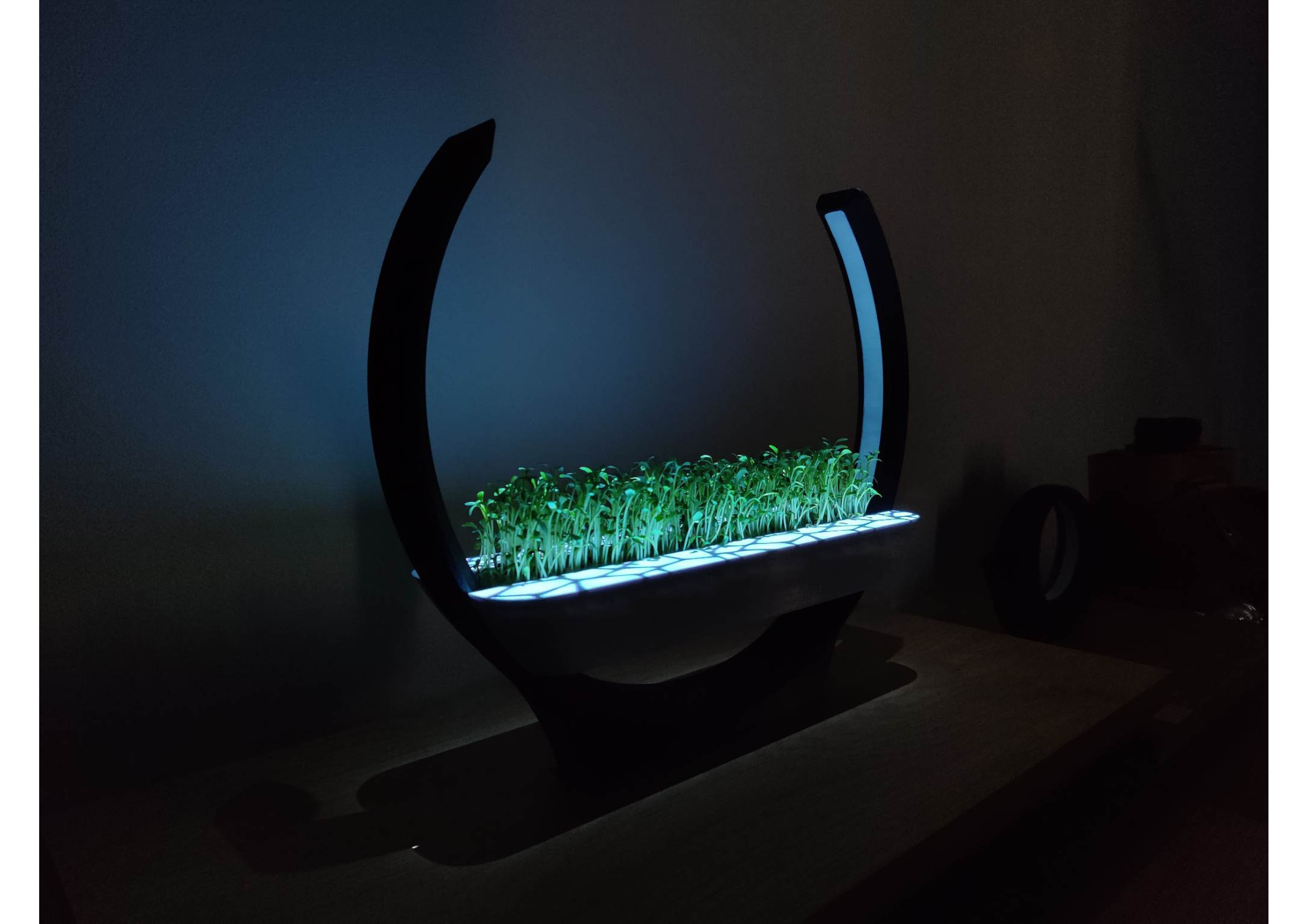
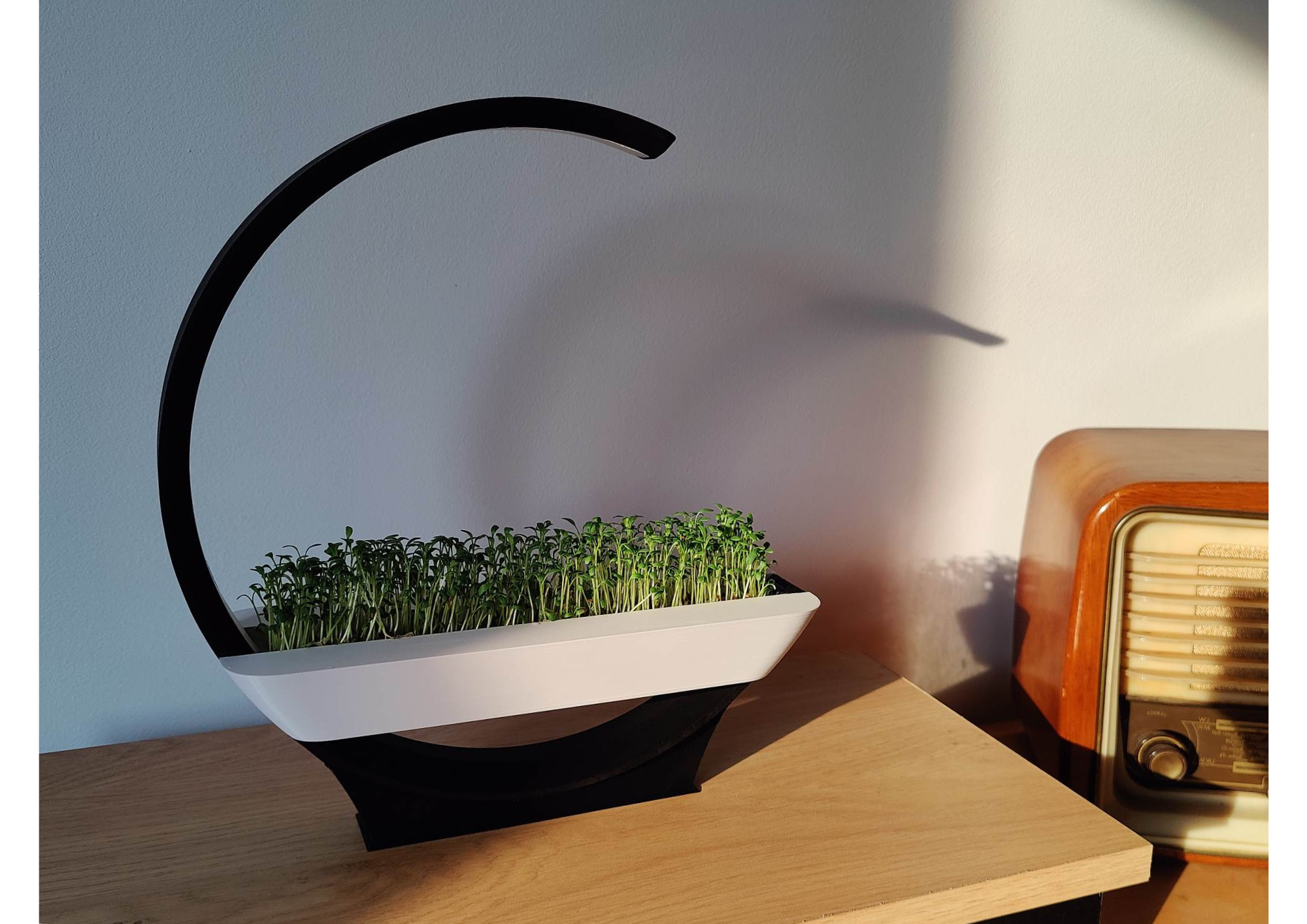
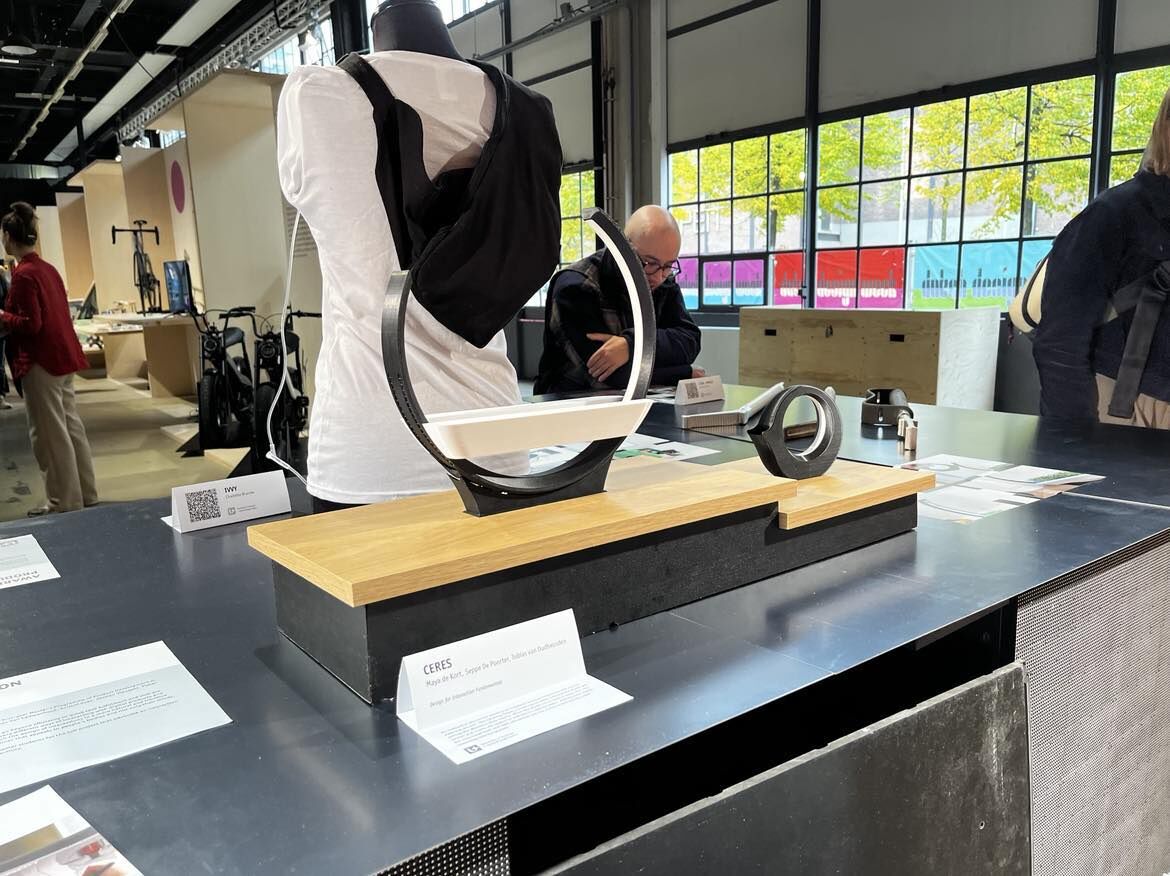
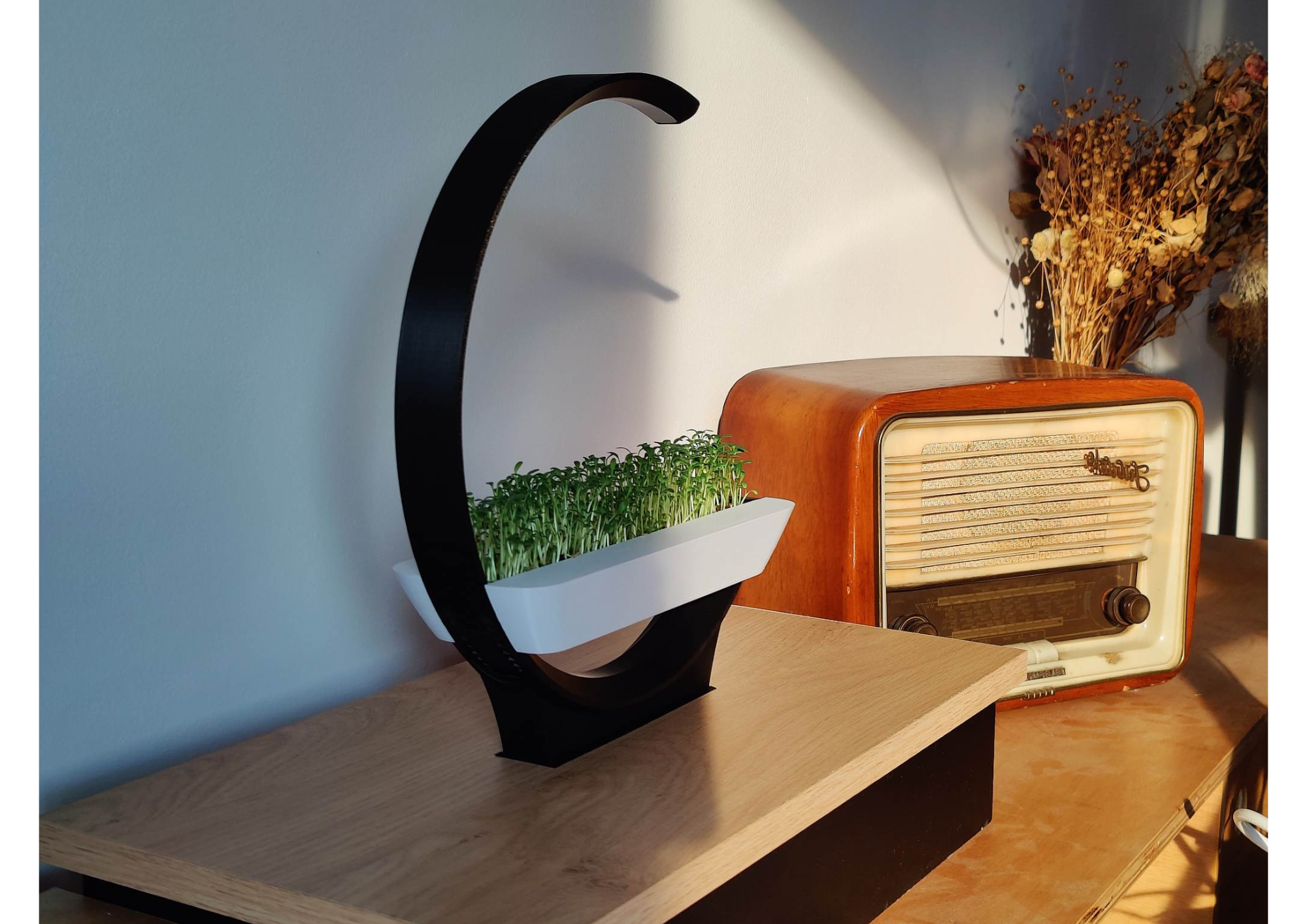
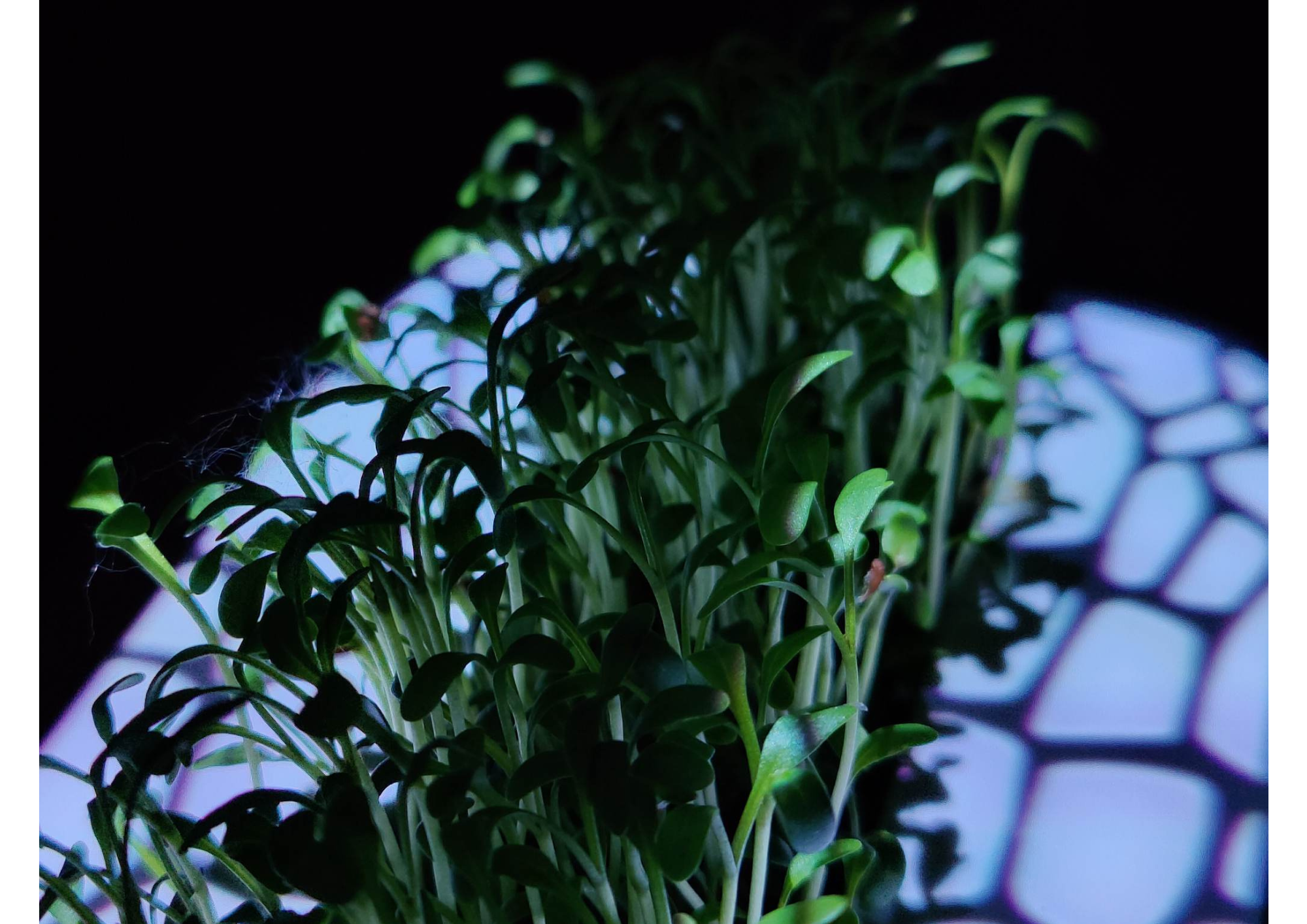
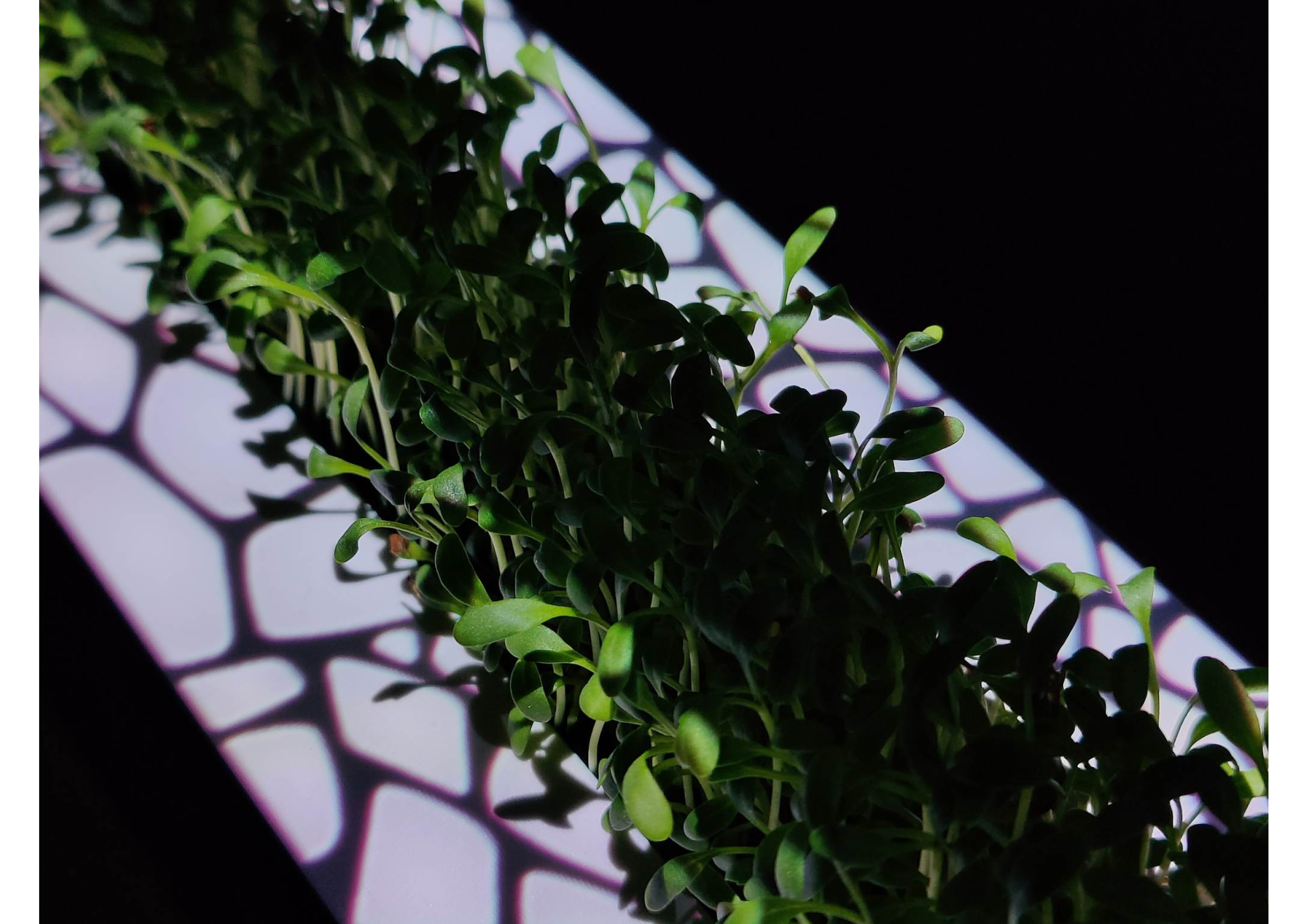
Ceres is een plantenbak die aangeeft wanneer je plantjes water nodig hebben. De bak draait steeds verder naarmate de plant droger wordt en keert na het water geven terug, gevolgd door een bewegende projectie.
INTRO
In this project we focus on human-product interaction – or the way people understand, use and experience digital products and situations.
IDEA
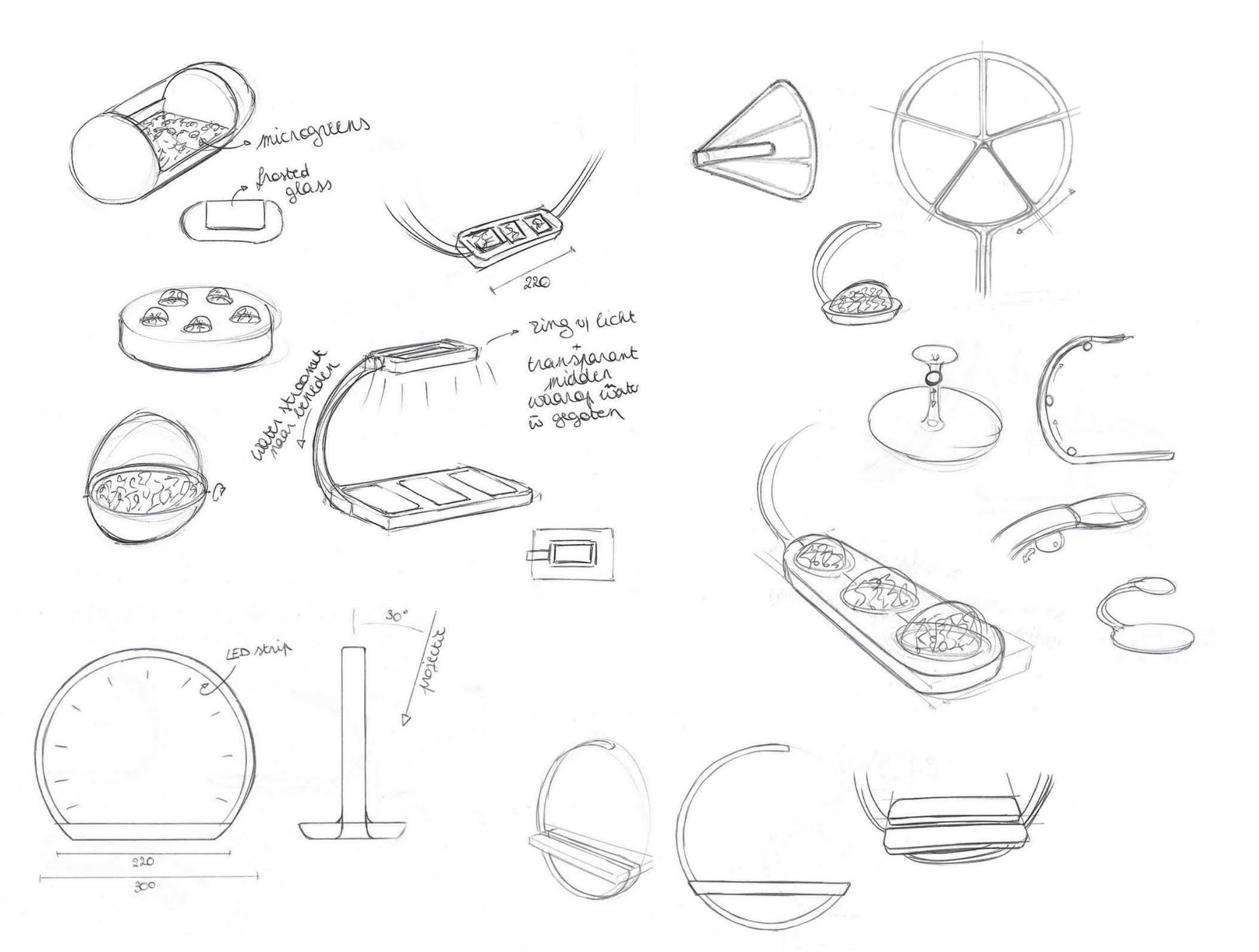
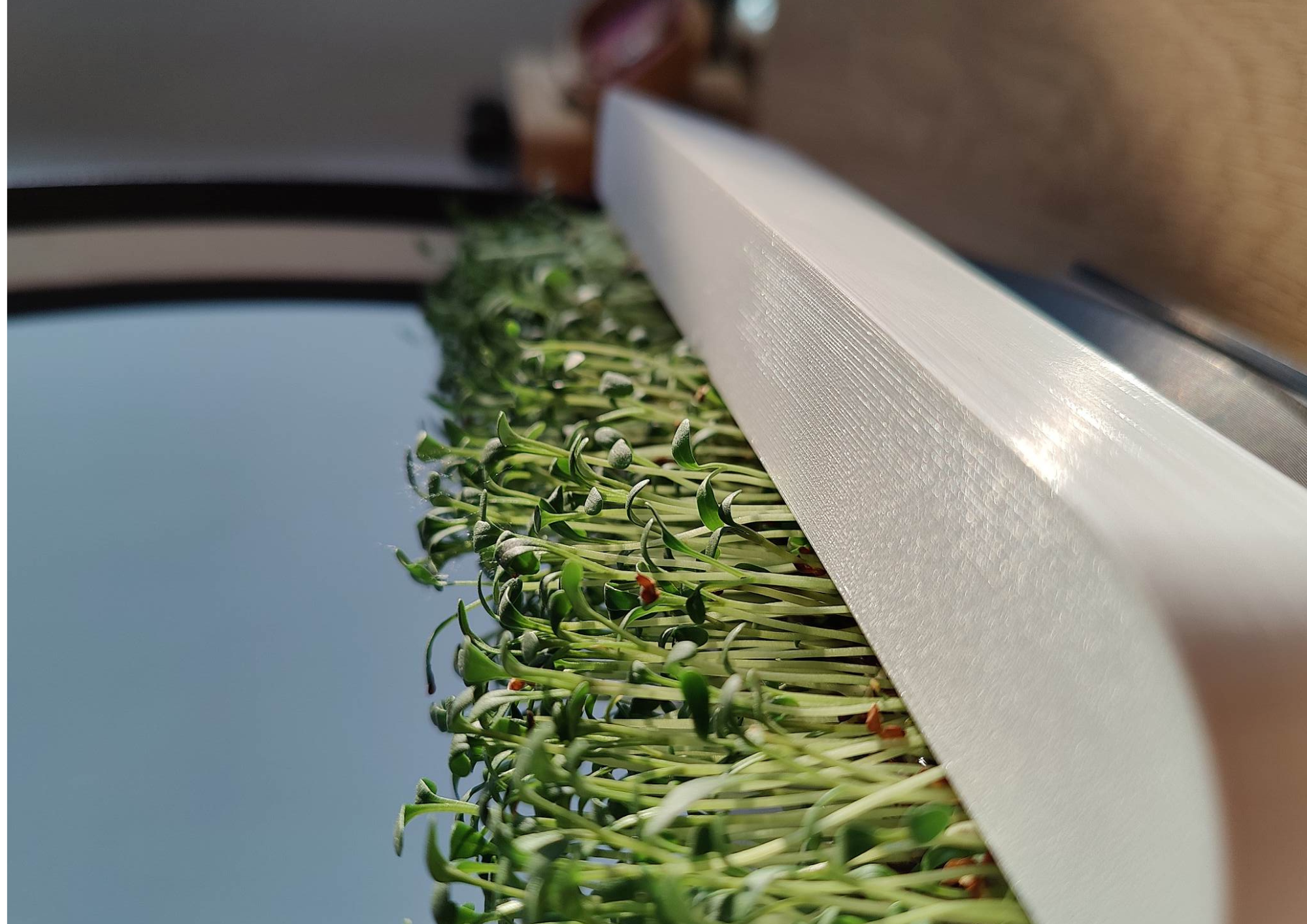
We began exploring how physical interactions could blend with on-screen projections, and shifted towards abstract concepts. We settled on creating a planter for microgreens, using plants to interact with projections. This idea, if executed well, promises to be both meaningful and visually appealing.
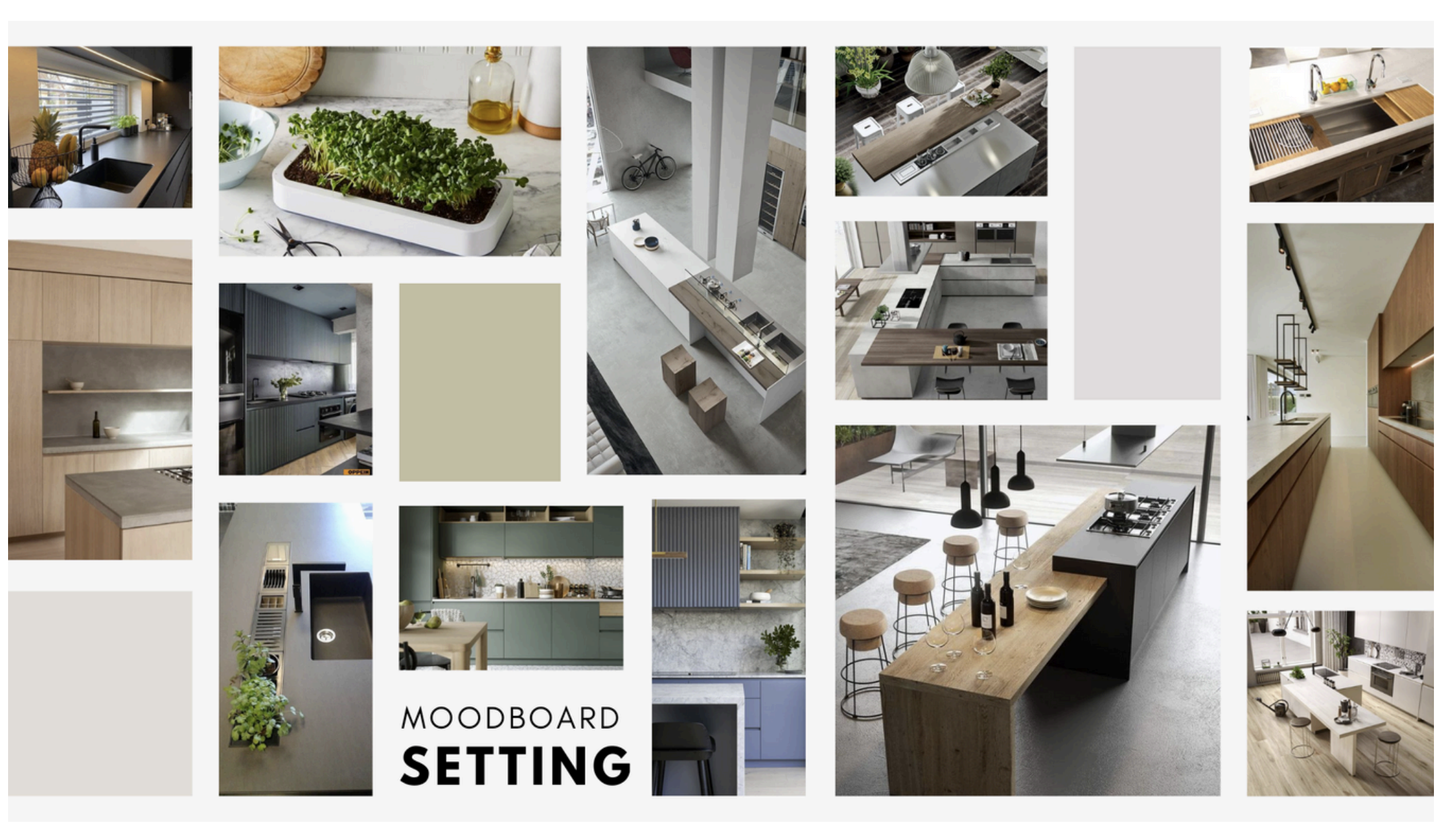
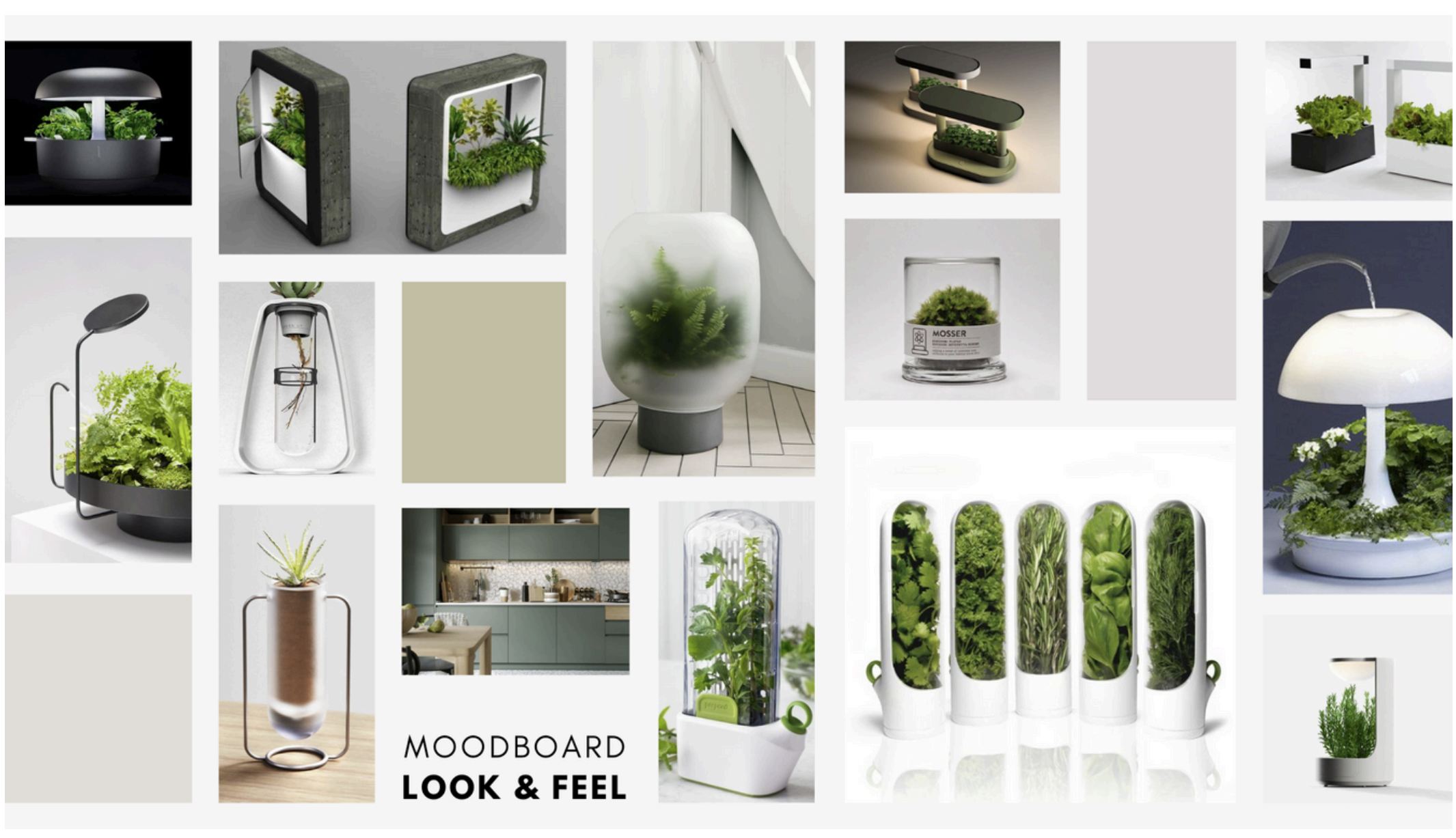
MOOD
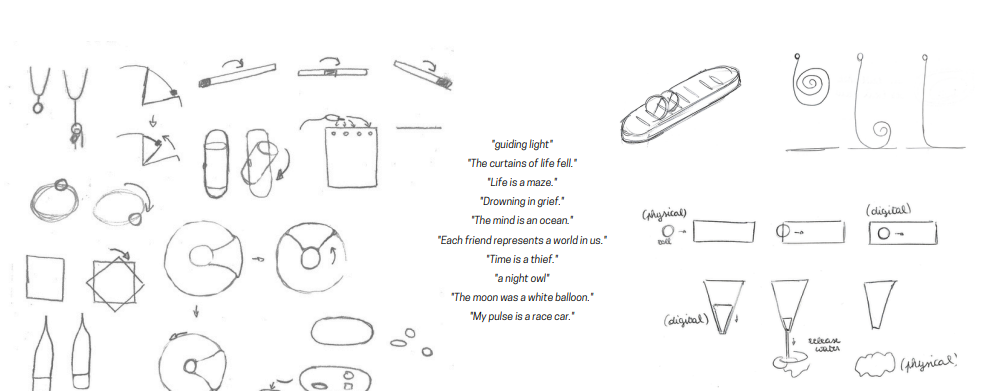
SKETCH
CONCEPT
1.
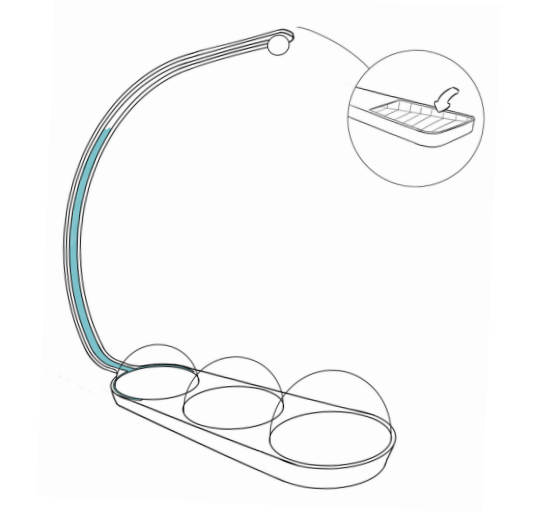
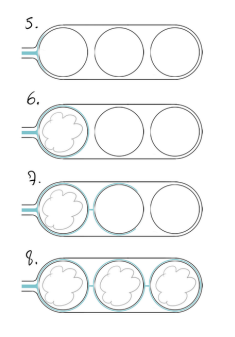
This first concept consists of a ring attached to a solid base. Additionaly, there is a
sphere attached to the inside of the ring which indicates the water level of the
planter and consequently notifies the user when the microgreens need water. Water
is added through the end of the ring and flows through the base, around three
humidity domes. Every humidity dome is filled with a puff of fog as soon as the water
has traveled around its periphery
2.
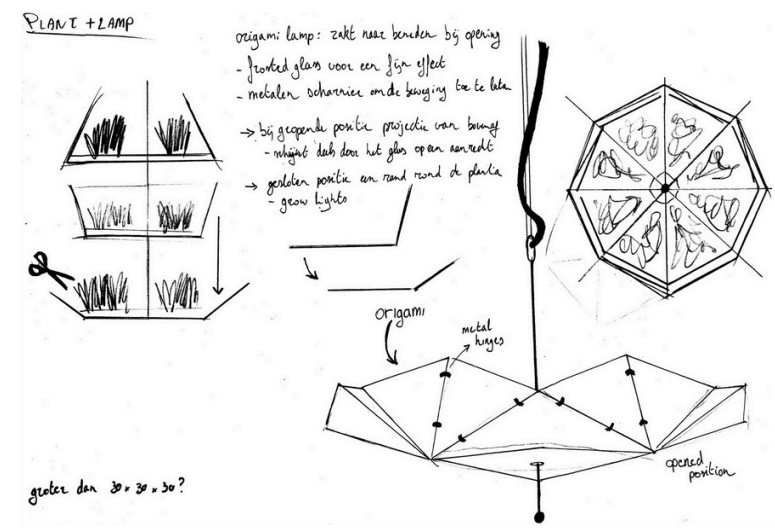
Our second concept was a hanging lamp that could open and close, providing access to the plants for watering or harvesting. The lampshade would be made of frosted glass/plastic, which would allow light to shine through. When the shade is closed, the light projected from above would function as a growing light for the plants. When the shade is lowered, the light shines on the countertop.
3.
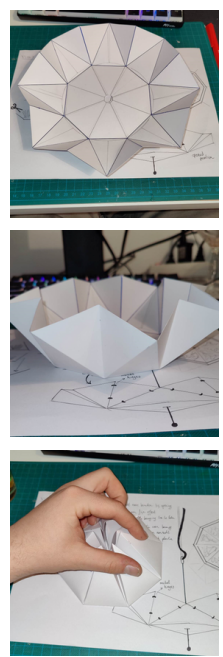
This concept emphasizes the ritual of watering your plants. It will also visually remind you to water your plants. To water the plants, you need to pour the water in the center of the product. Whenever the water seeps through, a projection becomes visible on top of the product. This can range from abstract waves to a time related projection.
DESIGN
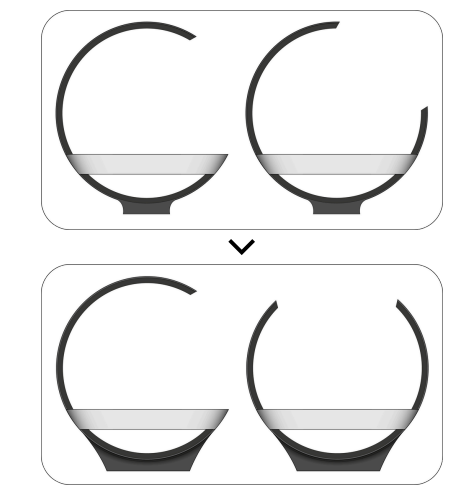
After the exploratory phase and creation of our first concepts we decided together with our professors to continue along the lines of concept 1. It quickly underwent some changes such as extending the ring around the planter and making it rotate to create a bigger sense of movement than the little sphere. We also scrapped the idea of using humidity domes since this would most likely be very complicated.
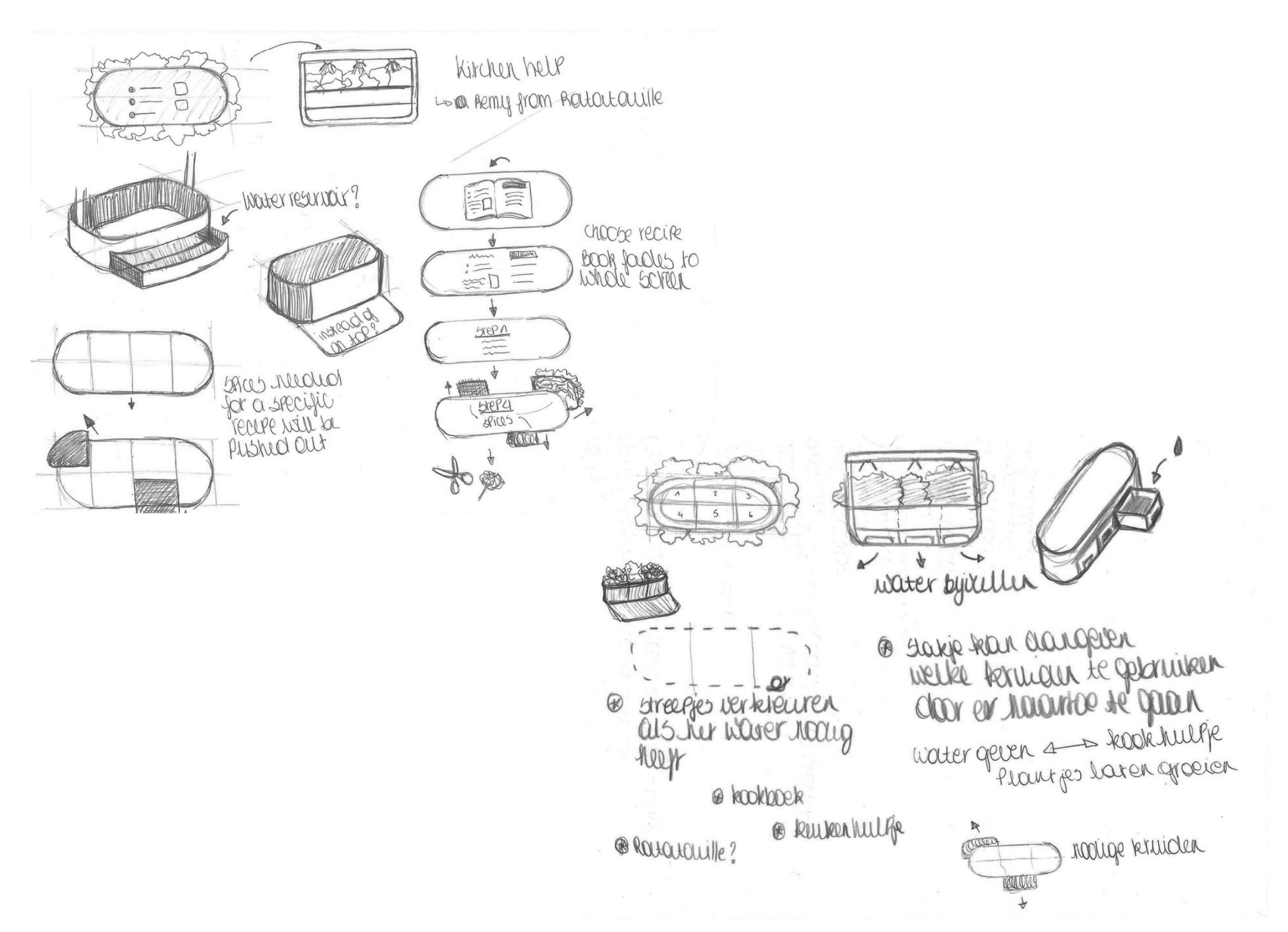
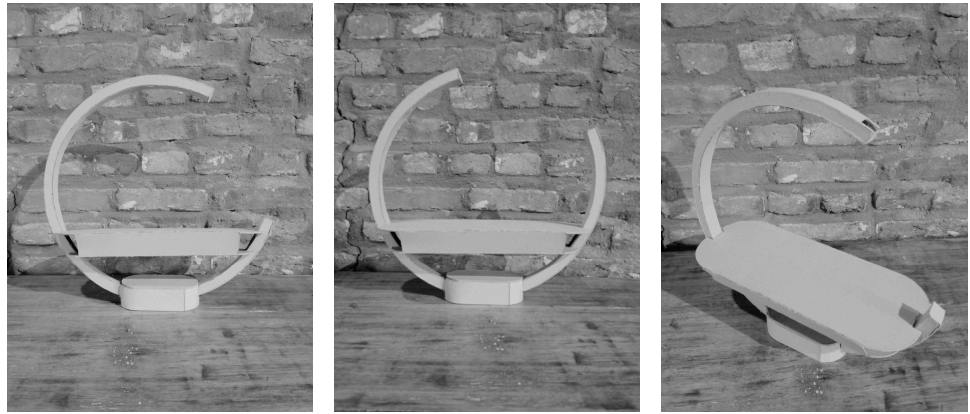
We started with setting up a rough storyline. Then our first cardboard prototype followed.
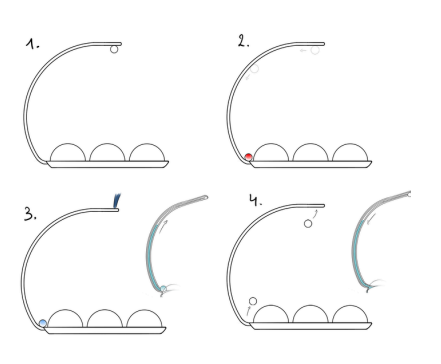
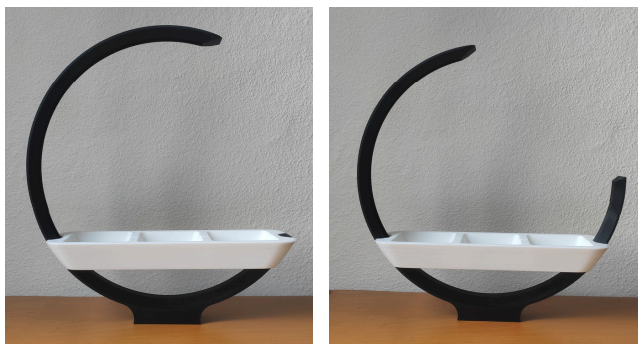
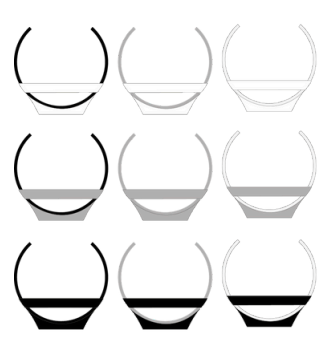
The product would notify its user that the microgreens were in need of water by rotating slightly (+/- 30 degrees). Then water could be added through one end of the ring. By pressing the other end, the ring would move back to its original position.
The cardboard prototype was used as a tool to start creating a 3D model of our concept. We made sure that the resulting 3D-printed model was already functionally on point, since it would be a challenge to turn our sketched ideas into a working prototype.
The mechanism underwent some changes throughout the rest of the project, so this will be explained later.
After making a first prototype and deciding on the overall shape and function, we had to go more into detail. Our professors made the suggestion to increase the amount of rotation of the outside ring to further accentuate its movement. This meant we also had to rethink the design of the base, to accomodate for the increase in mechanical parts.
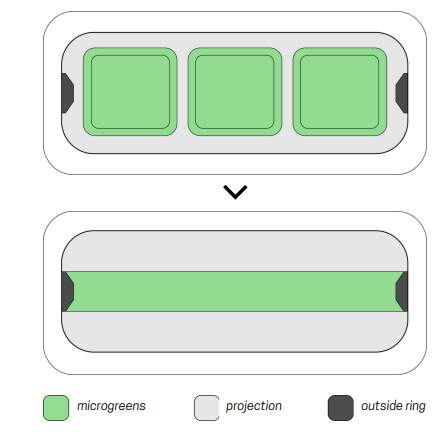
Furthermore, we changed the layout of the planter itself, to better integrate it into the design as a whole.
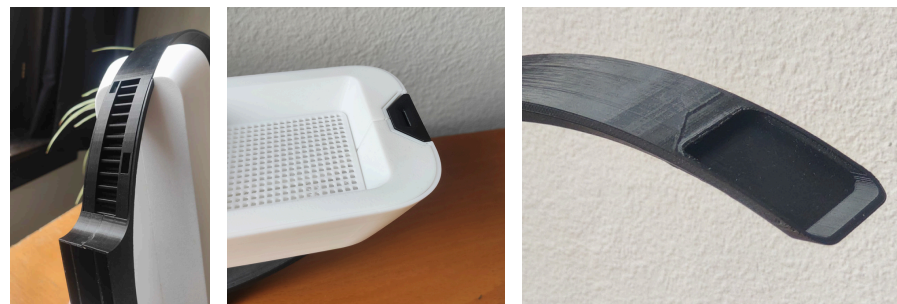
Additionally, the two ends of the ring had to be thought out more carefully. Here it was of great importance to integrate the button and the water intake in a subtle and sleek manner but still present enough to be used intuitively. The current design was already good, it just had to be in line with the projection on those surfaces.
Lastly, the decision was also made to design a custom watering can.
After making these detailed design decisions, another crucial part of the design would be the colour of the final prototype.
To create a clean and temporary look we eventually chose for a complete black base and white planter. This way, the contrast between the projection on the white surface of the planter and the black base would really going to stand out.
BRAND
Roman godess of agriculture and motherlove
(the Greek godess Demeter)
FINAL
LED-strip & waterflow
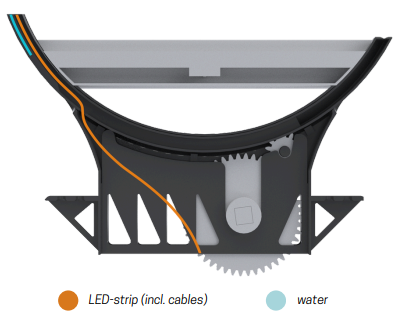
The LED-strip on the inside of the ring lies in a slot, leaving as much space as possible to properly diffuse its LEDs when turned on. The cables that run from the end of the strip to the Arduino leave the ring through a small hole that will never be visible to the user. The base has been designed in such a way that it is wide enough for the hole to stay within the boundaries of the base when going from one position of the ring to the other. Besides that, the cables can move freely within the base during the rotation.
The water is stored behind the LED-strip, as well as on either side of it in provided channels.
Gears
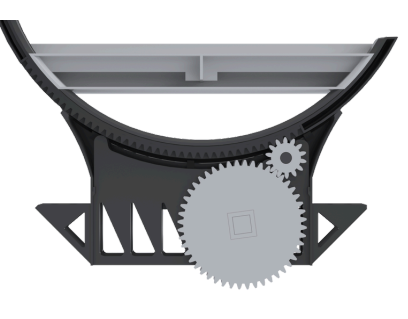
Gear teeth have been added to the outside of the ring on either side of the LED-strip. This way the ring is able to move in a more smooth and stable manner. To reduce the visibility of the gear teeth in the ring, an additional set of smaller spur gears were added. This opens up the opportunity to show less teeth on the left side of the ring. The smaller gears are connected to two bigger ones, that undergo a rotation of 250 degrees using a servomotor. This results in a 50 degrees rotation of the ring.
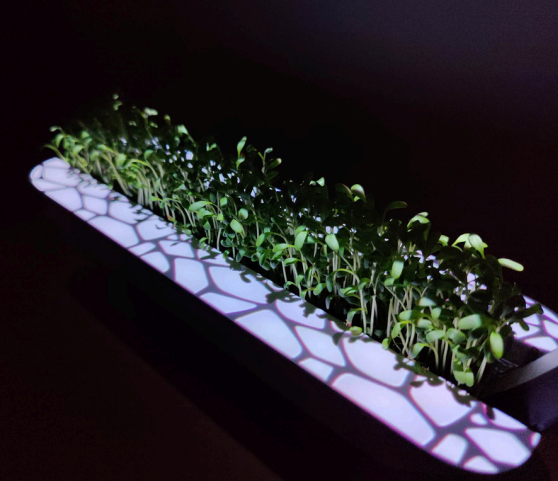
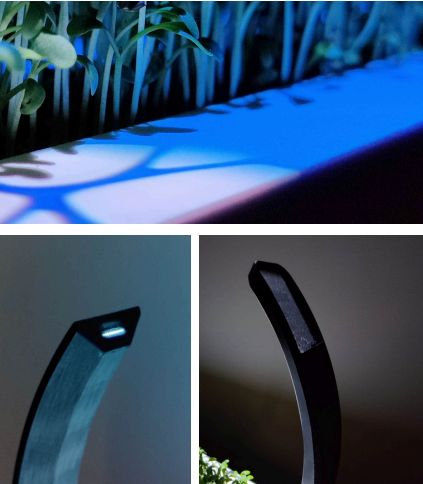
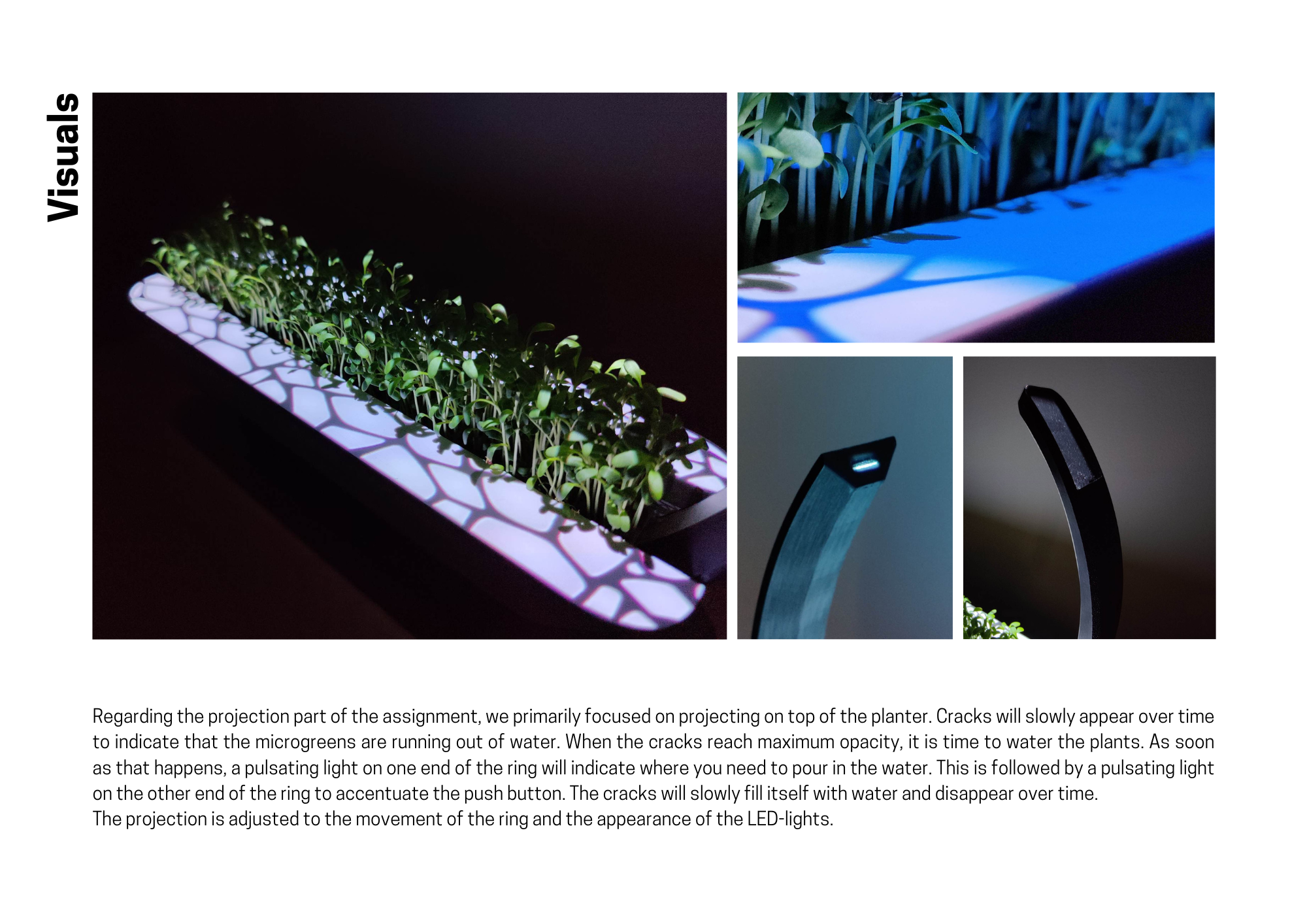
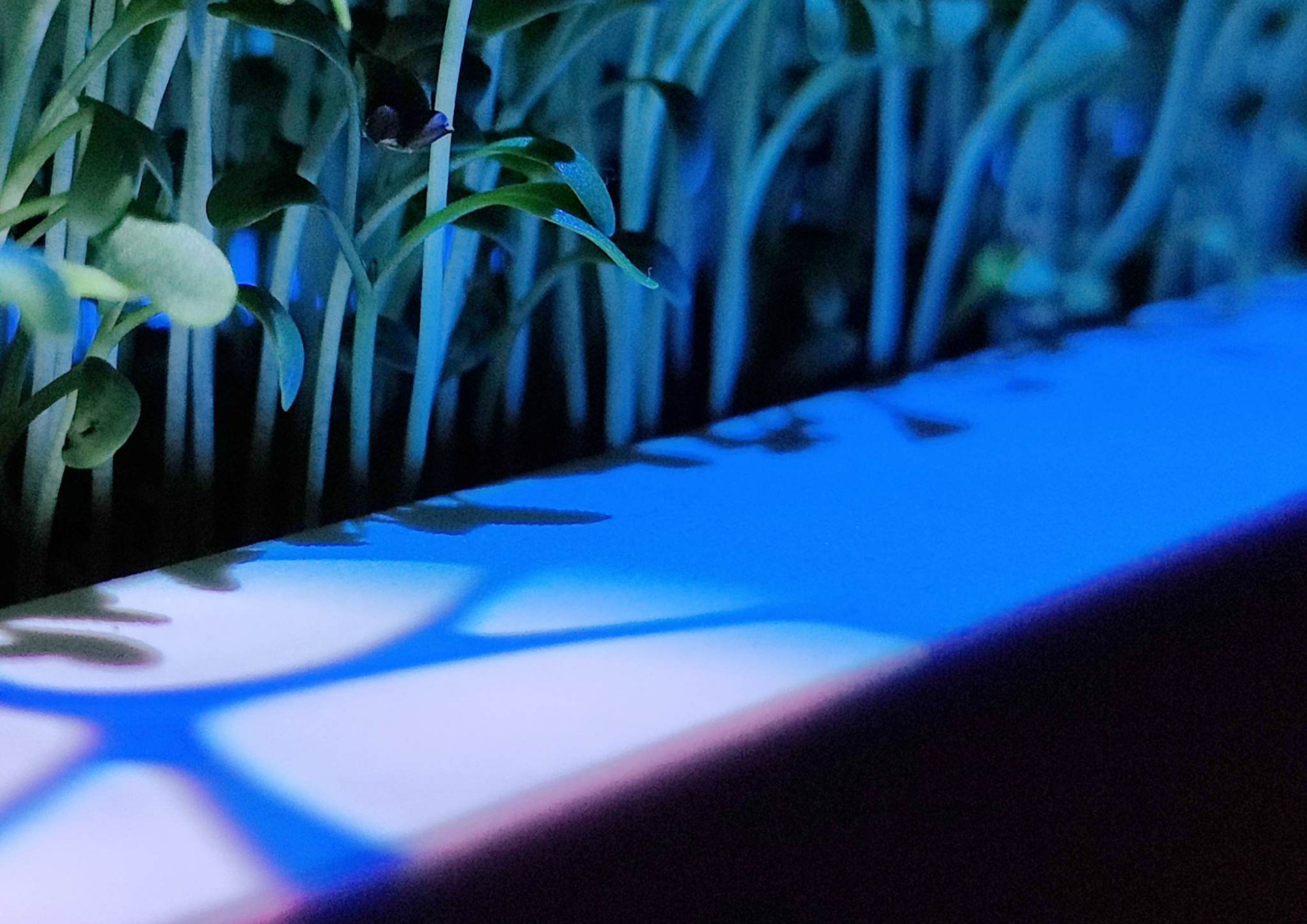
Regarding the projection part of the assignment, we primarily focused on projecting on top of the planter. Cracks will slowly appear over time to indicate that the microgreens are running out of water. When the cracks reach maximum opacity, it is time to water the plants. As soon as that happens, a pulsating light on one end of the ring will indicate where you need to pour in the water. This is followed by a pulsating light on the other end of the ring to accentuate the push button. The cracks will slowly fill itself with water and disappear over time. The projection is adjusted to the movement of the ring and the appearance of the LED-lights.